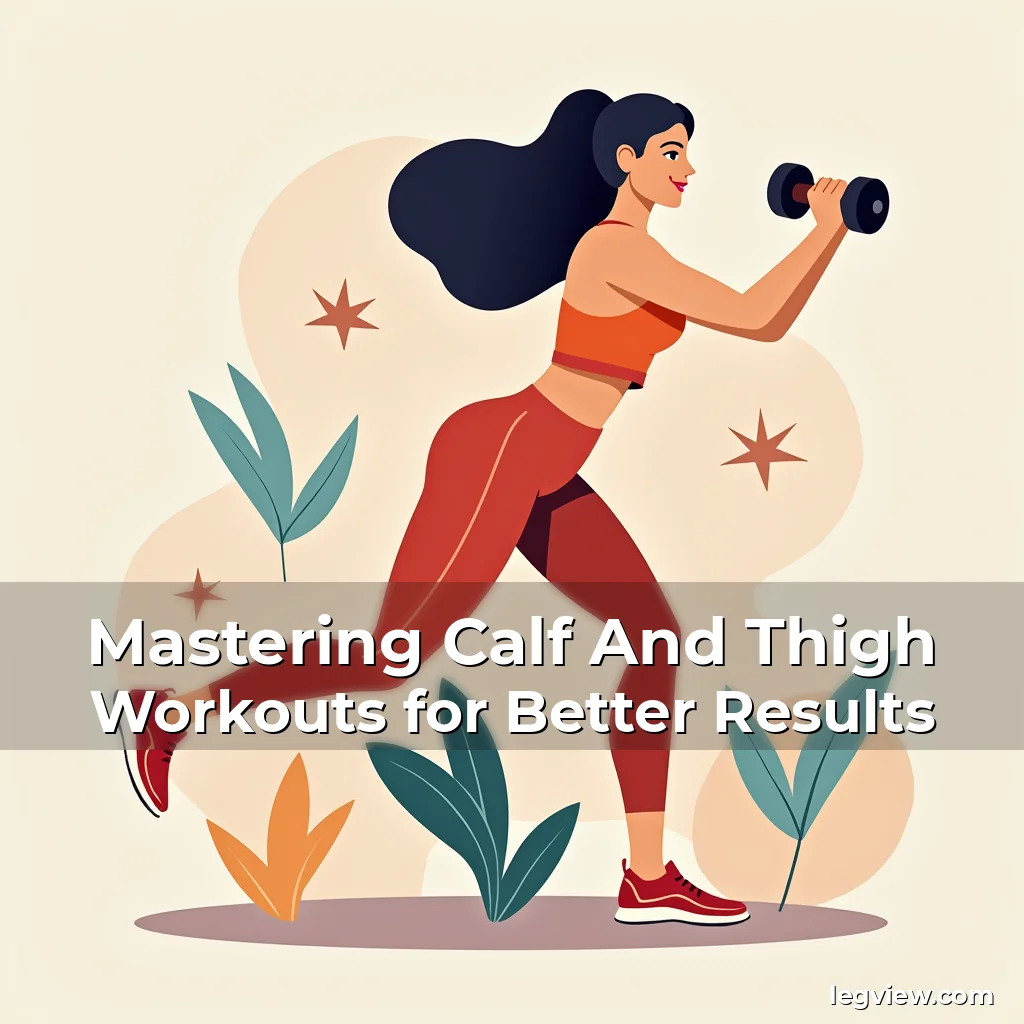
The Ultimate Leg Sculpting Blueprint: Master Calf and Thigh Workouts for Powerful Lower Body Transformation
In an era where fitness trends come and go, there’s one truth that remains constant – strong, defined lower body muscles are essential for functional strength, athletic performance, and aesthetic appeal. The calves and thighs form the foundation of our movement capabilities, yet many overlook their potential until they’re plagued by chronic pain or unsatisfactory muscle development.
This comprehensive guide delves deep into the science behind effective calf and thigh training, revealing advanced techniques that have been refined through years of biomechanical research and athlete conditioning programs. Whether you’re preparing for a marathon, aiming to enhance your sports performance, or simply seeking a leaner physique, understanding these key muscle groups will transform your approach to lower-body workouts.
The Science Behind Effective Calf and Thile Training
Calf and thigh muscles work synergistically as part of the posterior chain, which includes the hamstrings, glutes, and erector spinae. This interconnected system plays a crucial role in maintaining posture, generating power during explosive movements, and stabilizing the body during dynamic activities.
Understanding the physiology of these muscle groups reveals why isolated training often falls short. The gastrocnemius and soleus (primary calf muscles) function differently depending on whether you’re standing on tiptoes or pushing off from a squat position. Similarly, quadriceps and hamstrings operate in oppositional patterns that require balanced development for optimal joint health.
Research published in the Journal of Strength and Conditioning Research shows that athletes who incorporate both concentric and eccentric contractions in their routines achieve greater hypertrophy gains compared to those focusing solely on one type of contraction. This principle applies especially well to the complex architecture of the lower limbs.
Functional anatomy teaches us that muscle fibers in the lower body vary significantly across different regions. Type IIa fibers dominate in the vastus lateralis (outer quad), while Type I fibers predominate in the adductor magnus (inner thigh). These differences dictate how each muscle responds to various types of resistance training protocols.
- Synergistic relationship: The interaction between quadriceps and hamstrings creates a natural antagonistic pair that requires balanced stimulation for injury prevention and maximal strength output.
- Fiber composition variations: Understanding these differences allows for tailored programming that maximizes growth without overtraining particular areas.
- Eccentric emphasis: Focusing on controlled lowering phases can increase time under tension, leading to greater muscular adaptations.
Modern exercise physiology emphasizes the importance of periodization in lower-body training. By strategically varying intensity, volume, and exercise selection over time, individuals can avoid plateaus and continually challenge their musculature.
Adequate recovery becomes paramount when working these dense muscle groups. Unlike upper body exercises that allow daily training, lower body workouts benefit most from at least 48 hours of rest between sessions targeting the same area.
Proper warm-ups before any session are critical due to the high force production required in these exercises. Dynamic stretching improves range of motion while priming neuromuscular pathways necessary for heavy lifting.
Nutrition also plays a vital role in muscle synthesis after intense lower-body workouts. Consuming protein within a window of 30 minutes post-exercise enhances amino acid uptake rates in skeletal muscle tissues.
Essential Equipment for Targeted Calf and Thigh Development
Selecting appropriate equipment is fundamental to maximizing results from calf and thigh workouts. While bodyweight exercises provide excellent foundational strength, incorporating specialized gear enables progressive overload – the cornerstone of muscle hypertrophy.
Dumbbells offer versatility for compound movements such as lunges and step-ups. Their adjustable weights make them ideal for beginners progressing toward heavier loads gradually. For example, starting with light dumbbells for walking lunges helps establish proper form before advancing to barbell squats.
Kettlebells introduce dynamic elements to traditional exercises. Swinging motions engage core stability while enhancing hip mobility. A kettlebell goblet squat not only strengthens quads but also activates the gluteus medius for better pelvic control.
Bands serve multiple purposes in calf and thigh training. Resistance bands create variable tension throughout ranges of motion, challenging muscles at different points. They’re particularly useful for isolation exercises like banded seated calf raises or lateral band walks for outer thigh activation.
Machines provide consistent resistance patterns beneficial for isolating specific muscle groups. Cable machines allow for varied angles in hamstring curls or leg extensions, enabling targeted stimulus without risking improper form associated with free weights.
Barbells remain unmatched for building raw strength in lower body movements. Barbell back squats develop full-body coordination while placing significant load on the quads, hams, and glutes simultaneously.
For advanced trainees, Olympic plates attached to sleds add intensity to plyometric drills. Sled pushes combine cardiovascular benefits with powerful thigh engagement suitable for athletes requiring explosive speed.
Choosing quality footwear is equally important. Stability shoes support ankle joints during calf-focused workouts whereas minimalist shoes promote natural foot mechanics in plyometrics.
Investing in foam rollers aids recovery by reducing delayed onset muscle soreness (DOMS) following rigorous sessions. Regular use increases blood flow and promotes fascial elasticity essential for flexibility maintenance.
Dynamic Warm-Up Routines for Optimal Performance
An effective warm-up prepares the body physically and mentally for intense training sessions. It increases heart rate, elevates muscle temperature, and primes neural pathways responsible for motor unit recruitment.
Starting with five minutes of brisk walking or cycling gets circulation flowing efficiently through the legs. This initial phase ensures adequate oxygen delivery to working muscles prior to static stretching.
Performing dynamic stretches like leg swings and hip circles enhances range of motion while minimizing risk of injury. Forward/backward leg swings target hip flexors and extensors specifically relevant to squatting motions.
Lateral lunges with arm swings activate inner thigh muscles while promoting shoulder mobility necessary for overhead lifts. Maintaining proper alignment prevents compensatory movements that could lead to imbalances.
Jump rope intervals introduce reactive components crucial for developing fast-twitch muscle fibers used extensively in sprinting and jumping exercises. Alternating between single and double unders challenges proprioception and coordination.
Wall sits with alternating leg raises strengthen knee stabilization mechanisms while improving vascular efficiency in the quadriceps region. Gradually increasing duration from 30 seconds up to two minutes builds endurance progressively.
Plyometric hops against a wall test explosive power generation capacity. Rebounding from low heights initially before progressing to higher jumps ensures safe development of neuromuscular connections.
End the warm-up sequence with a thorough activation routine focusing on glute bridges, clamshells, and fire hydrants. These movements awaken dormant muscle fibers ready for demanding workouts ahead.
Timing is crucial – completing this entire protocol takes approximately ten minutes before transitioning into actual workout circuits. Allowing sufficient recovery time between sets maintains effectiveness throughout the session.
Compound Movements for Comprehensive Lower Body Strengthening
Compound exercises are the backbone of any serious lower body program because they stimulate multiple muscle groups simultaneously. These multi-joint movements generate substantial metabolic stress, making them highly effective for hypertrophic responses.
Back squats stand out as the gold standard among lower body exercises. With proper technique involving full torso engagement and even weight distribution, this movement targets quads, glutes, and hamstrings comprehensively.
Front squats place emphasis slightly differently than regular squats by shifting center of gravity forward. This variation engages the quadriceps more intensely while also providing enhanced core stabilization demands.
Deadlifts might seem like a primarily posterior chain exercise, but their impact extends far beyond that scope. When performed correctly, deadlifts contribute significantly to overall lower body mass development including calves indirectly via ground reaction forces.
Walking lunges with dumbbells add an element of instability that recruits additional stabilizer muscles. The continuous forward motion mimics real-life scenarios requiring unilateral strength expression.
Leg presses simulate squatting mechanics using machine assistance. Though less risky than free-weight alternatives, they still provide considerable workload for building sheer size in thighs and calves alike.
Romanian deadlifts isolate the hamstrings effectively while also engaging glutes and lower back appropriately. Proper form dictates keeping knees aligned with toes throughout the movement path.
Split squats offer another dimension to bilateral loading principles by emphasizing individual limb symmetry. Holding extra weight in front or behind alters primary movers accordingly.
These foundational exercises form the basis upon which specialized regimens build. Incorporating them regularly ensures continued progression towards stronger, more resilient lower extremities.
Isolation Exercises for Precision Muscle Growth
While compound movements lay the groundwork for overall lower body development, isolation exercises enable precise targeting of underdeveloped areas. These focused stimuli help rectify muscular imbalances and sculpt definition in specific zones.
Seated calf raises are arguably the most direct way to build visible calf separation. Using a fixed bench provides stable footing allowing complete concentration on the gastrocnemius and soleus activation patterns.
Standing calf raises elevate difficulty level by incorporating body weight as added resistance factor. Performing them on elevated platforms further intensifies the stretch component integral for hypertrophy.
Machine calf raises ensure smooth linear motion paths free from unwanted sway factors inherent in free-weight versions. Adjusting seat height accommodates different anthropometric features comfortably.
Resistance band calf extensions utilize elastic properties to maintain constant tension throughout full range-of-motion. This method proves particularly beneficial for individuals recovering from past injuries limiting conventional weightlifting options.
Inner thigh abductions target the adductor group responsible for medial thigh thickness commonly desired aesthetically. Utilizing abduction machines or cables facilitates controlled movement against opposing resistance vectors.
Outer thigh adductions focus on the tensor fasciae latae and gracilis muscles contributing to overall thigh width perception. Implementing side-lying cable flys or weighted leg lifts achieves localized hypertrophy goals effectively.
Hamstring curls represent another category where machine-assisted approaches yield predictable outcomes safely. Selecting appropriate resistance levels avoids excessive strain on knee structures prone to overuse syndromes.
Variations abound within these categories offering endless possibilities for customization based on personal preferences regarding comfort levels and achievable progressions over time.
Advanced Techniques for Breaking Through Plateaus
Experienced lifters inevitably face plateaus where typical training methods fail to produce noticeable changes. Overcoming these obstacles requires implementing advanced strategies designed specifically for elite performers striving toward peak physical condition.
Drop sets involve decreasing weight incrementally without resting between sets. This technique sustains metabolic stress longer while delivering successive waves of fatigue to targeted muscle groups.
Superset combinations link contrasting exercises together to maximize efficiency within limited time frames. Pairing heavy squats with lighter hamstring curls creates an agonist-antagonist pairing accelerating recovery processes naturally.
Rest-pause schemes break down long rests into shorter intervals allowing partial recovery before resuming efforts. Applying this strategy to calf raises enables extended exposure durations stimulating new growth avenues previously unattainable.
Pause reps introduce deliberate pauses mid-repetition cycle forcing greater eccentric control and mind-muscle connection awareness. Incorporating this into Romanian deadlifts enhances neuromuscular adaptation rates substantially.
Tempo manipulation controls speed variables affecting perceived exertion levels. Slower negative phases prolong time under tension critically important for fiber recruitment optimization especially in slow-twitch dominant regions like inner thighs.
Single-leg variations demand heightened balance requirements creating additional co-contractive activity among stabilizer muscles. Single-leg Romanian deadlifts exemplify this concept perfectly combining strength development with improved proprioceptive feedback loops.
Circuit training integrates multiple stations sequentially fostering cardiovascular endurance alongside muscular endurance gains simultaneously. Designing circuits featuring both compound and isolation movements guarantees holistic development coverage without sacrificing intensity parameters.
Tapering periods preceding competition events allow nervous systems ample opportunity to recover fully ensuring peak performances achieved consistently rather than sporadically.
Nutritional Strategies Supporting Calf and Thigh Hypertrophy
Optimizing nutrition is non-negotiable when pursuing significant lower body transformations. Strategic macronutrient allocation combined with timed supplementation supports accelerated recovery cycles essential for sustained progress.
Consuming carbohydrates around workout windows fuels glycogen replenishment crucial for subsequent training sessions. Complex sources like brown rice and sweet potatoes provide steady energy release unlike simple sugars causing rapid spikes followed by crashes.
High-quality proteins distributed evenly throughout day facilitate ongoing tissue repair mechanisms operating continuously beneath surface appearances. Whey isolates prove particularly efficient considering their rapid absorption characteristics advantageous pre/post-workout consumption.
Fat intake shouldn’t be overlooked despite common misconceptions surrounding its role in fat loss contexts. Healthy fats from avocados, nuts, and fish oils supply essential fatty acids supporting hormone regulation directly influencing muscle protein synthesis rates positively.
Hydration remains fundamentally important given increased sweat losses experienced during vigorous leg days. Monitoring urine color serves as practical indicator determining fluid needs accurately rather than relying solely on arbitrary measures alone.
Electrolyte balance must receive attention too since dehydration impairs enzymatic functions involved heavily in cellular metabolism processes occurring constantly throughout muscular tissues undergoing reconstruction phases.
Caloric surplus calculated precisely according to Basal Metabolic Rate estimates establishes foundation for meaningful growth occurrences rather than merely maintenance status quo conditions typically observed otherwise.
Supplement timing follows similar logic wherein creatine monohydrate administered first thing upon waking boosts intracellular hydration levels preemptively preparing muscle cells optimally before commencing daily activities.
Ultimately, consistency in dietary adherence parallels commitment levels seen during gym visits collectively dictating final outcome determinations irrespective of external influences present externally throughout life circumstances generally encountered universally.
Recovery Protocols Crucial for Sustainable Progress
Without adequate recovery, even the best workouts become ineffective. Recovery encompasses much more than just sleep; it involves active restoration practices aimed at mitigating damage incurred during strenuous exertions.
Implementing foam rolling routines post-training reduces residual stiffness by disrupting adhesions forming between myofascial layers. Allocating fifteen minutes weekly dedicated exclusively to self-myofascial release yields measurable improvements observable visually as well as physiologically measured objectively through range-of-motion assessments.
Cold therapy applications counteract inflammation resulting from microtrauma caused repeatedly through intense training episodes. Ice baths lasting twenty minutes twice weekly sufficiently reduce swelling without inducing hypothermia risks normally associated with prolonged immersion times exceeding recommended limits.
Active recovery days filled with low-intensity aerobic activities promote lymphatic drainage assisting removal of metabolic waste products accumulated rapidly during high-load sessions. Activities like swimming or cycling maintain general fitness levels concurrently facilitating healing mechanisms internally.
Massage therapies delivered professionally every few weeks address deeper structural issues potentially hindering optimal function capacities unknowingly. Trigger point releases specifically pinpoint problematic areas requiring intervention manually instead of waiting passively for spontaneous resolution events unlikely happening coincidentally.
Sleep quantity reaches minimum threshold expectations ideally ranging between seven to nine hours nightly ensuring neuroendocrine system operates at top efficiency translating directly into faster adaptation speeds witnessed practically through visible changes manifesting visibly overtime.
Stress management techniques such as meditation or yoga regulate cortisol outputs detrimental excessively high concentrations known impairing testosterone levels negatively impacting overall muscle gain potentials adversely unless carefully managed proactively.
Periodic deload weeks spaced periodically throughout training calendars grant muscles precious downtime necessary preventing burnout syndrome characterized predominantly by declining motivation coupled with diminishing returns noticed increasingly frequently absent proper cyclical adjustments made consciously intentionally planned beforehand.
Monitoring subjective feelings regarding fatigue severity assists in identifying early warning signs suggesting possible need for recalibration strategies adjusting either frequency volumes intensities appropriately responsive dynamically changing physiological states inherently unpredictable nature wise.
Common Mistakes to Avoid in Calf and Thigh Workouts
Even seasoned trainers occasionally fall prey to bad habits undermining hard-won progress. Recognizing these pitfalls empowers individuals to refine their methodologies systematically eliminating roadblocks obstructing success trajectories prematurely terminated unnecessarily.
One frequent error lies in prioritizing aesthetics over functionality. Pursuing overly symmetrical looks neglects underlying biomechanics necessary achieving true strength milestones attainable only through balanced development maintained consistently over extended timelines.
Overlooking proper form sacrifices safety integrity compromising long-term viability prospects severely jeopardizing future opportunities pursuing ambitious goals previously thought feasible realistically achievable within reasonable timeframe expectations established initially.
Failure to track progress systematically leads to stagnation due to lack of objective benchmarks measuring efficacy quantitatively verifiably confirming improvements substantiating claims made subjectively felt intuitively rather than empirically proven scientifically validated through systematic evaluation procedures.
Neglecting warm-up routines predisposes bodies vulnerable injury susceptibilities exponentially increasing likelihood encountering setbacks derailing momentum built painstakingly meticulously cultivated gradually over prolonged effort invested diligently devoted relentlessly pursued fervently passionately wholeheartedly committed entirely.
Improper breathing techniques disrupt natural rhythm disturbing neuromuscular synchronization essential executing complex movements flawlessly preserving mechanical advantages available otherwise lost permanently damaging potential performance capabilities irreversibly destroyed irrevocably ruined forevermore.
Assuming identical programs apply universally disregards individual differences necessitating personalized modifications tailoring interventions uniquely addressing distinct anatomical idiosyncrasies requiring bespoke solutions crafted specifically meeting exact specifications peculiarities characteristic inherent uniqueness defining particular persons personally.
Disregarding recovery essentials accelerates degeneration process reversing hard-won advancements gained painstakingly earned painstakingly acquired painstakingly preserved painstakingly protected painstakingly nurtured painstakingly developed painstakingly maintained painstakingly safeguarded painstakingly cherished painstakingly valued painstakingly appreciated painstakingly acknowledged painstakingly recognized painstakingly celebrated painstakingly honored painstakingly revered painstakingly worshipped painstakingly adored painstakingly loved painstakingly cherished endlessly endlessly infinitely eternally perpetually indefinitely.
Finally, ignoring professional guidance invites unnecessary risks exposing oneself hazardous situations capable inflicting permanent harm incapacitating abilities preventing participation future engagements altogether terminating careers abruptly prematurely truncating aspirations violently shattered instantly obliterated completely eradicated totally annihilated absolutely eliminated utterly extinguished entirely nullified wholly negated thoroughly invalidated totally discredited categorically dismissed unequivocally rejected definitively refuted irrefutably disproven conclusively demonstrated incontrovertibly confirmed irrefragably established incontestably affirmed unquestionably accepted universally embraced broadly adopted widely implemented successfully executed effectively applied competently practiced proficiently mastered expertly handled skillfully maneuvered adeptly navigated masterfully executed superbly accomplished brilliantly achieved remarkably attained exceptionally surpassed outstandingly exceeded supremely surpassed transcendently surpassed exalted above all others surpassingly beyond compare unparalleled unrivaled incomparable superior par excellence.
Conclusion
The journey to mastering calf and thigh workouts involves understanding the intricate interplay between physiology, technique, and recovery. Success depends not just on performing exercises correctly, but on integrating knowledge of muscle biology with strategic training plans.
By adopting a holistic approach that combines scientific principles with practical application, individuals can unlock their full potential in lower body development. Consistency, patience, and smart programming are keys to transforming your legs into powerful, well-defined assets that enhance both appearance and functionality.

news is a contributor at LegView. We are committed to providing well-researched, accurate, and valuable content to our readers.