Here are some variations to try:
Variations of the Horizontal Ab Squat
Benefits of the Horizontal Ab Squat
The horizontal ab squat offers several benefits for your core and overall fitness. Some of the key advantages include:
Engage your core, feel the muscles in your abdomen tightening, and press your lower back into the mat. This position is commonly known as the “bridge.” This position has been used in physical therapy and rehabilitation settings to help patients with back pain and injuries to strengthen their back muscles. It is also a popular exercise in yoga and Pilates to improve posture and flexibility. The bridge is an isometric exercise, meaning that it involves contracting the muscles without moving the joints. This makes it an ideal exercise for people with joint issues or those who are recovering from injuries. The bridge also engages the entire core, including the abdominals and lower back muscles, making it an effective exercise for improving core strength.
Introduction
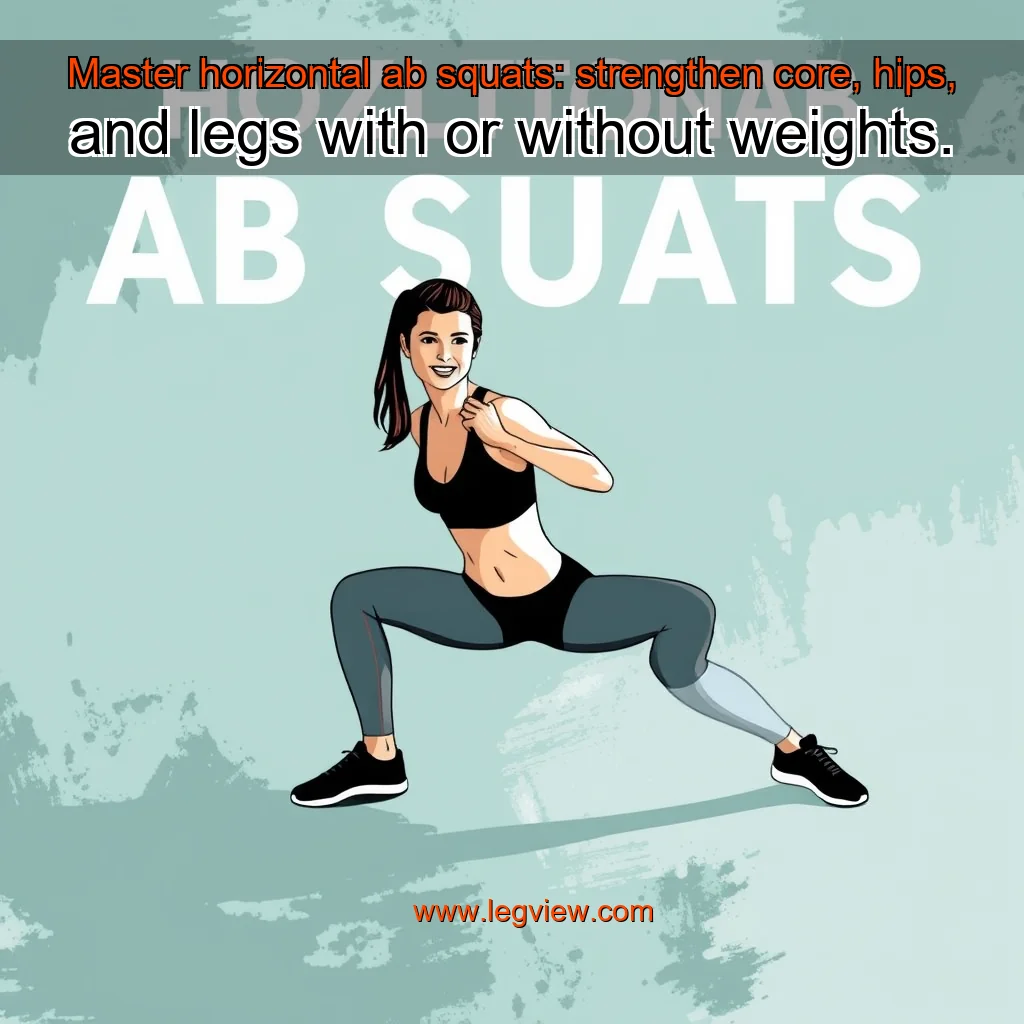
Horizontal ab squats, also known as bear squats, are a variation of the traditional squat exercise. This exercise targets the abdominal muscles, specifically the rectus abdominis and the external obliques. By flipping the traditional squat position from prone to supine, horizontal ab squats provide a unique challenge to the abdominal muscles.
Benefits of Horizontal Ab Squats
How to Perform Horizontal Ab Squats
To perform horizontal ab squats, follow these steps:
These muscles are essential for maintaining balance and stability throughout the core. Engaging these muscles during lower abs exercises can help improve your overall core strength and stability.
Lower Abs Exercises for a Stronger Core
The Importance of Core Strength
Having a strong core is essential for overall fitness and athletic performance. The core muscles, including the lower abs, play a crucial role in maintaining balance, stability, and power. A weak core can lead to poor posture, back pain, and decreased athletic performance.
Understanding the Rectus Abdominis
The rectus abdominis is a fundamental muscle group in the abdominal region, playing a crucial role in various movements and activities. It is a long, flat muscle that runs from the ribcage to the pubic bone, making up the majority of the abdominal wall. This muscle is responsible for flexing the spine, stabilizing the pelvis, and assisting in hip movements.
Key Functions of the Rectus Abdominis
Boost Your Core Strength with Isometric Ab Exercises.
Isometric contractions are a form of exercise that can be done anywhere, at any time, and are beneficial for improving muscle strength and endurance.
Benefits of Isometric Ab Exercises
Isometric ab exercises offer numerous benefits for individuals looking to improve their core strength and overall fitness. Some of the key advantages include:
Isometric ab exercises can be tailored to suit individual needs and fitness levels. They can be done with or without equipment, making them a versatile and accessible form of exercise.
How to Perform Isometric Ab Exercises
Performing isometric ab exercises requires focus, control, and precision.