Here are some variations:
Low-Impact Variations
High-Impact Variations
Engage your core and maintain the position for 30 seconds to a minute. Hold the position, breathing naturally, and don’t engage in any activity that could compromise the position, such as reading or using your phone. This is a foundational movement that can help improve flexibility and strength in the lower back and hamstrings. This movement is often referred to as the “Cat-Cow Stretch” or “Cat-Cow Pose.” It’s a simple yet effective exercise that can be done anywhere, anytime, without any equipment required. The Benefits of the Cat-Cow Stretch The Cat-Cow Stretch is an excellent exercise for improving flexibility and strength in the lower back and hamstrings.
The Benefits of Horizontal Ab Squats
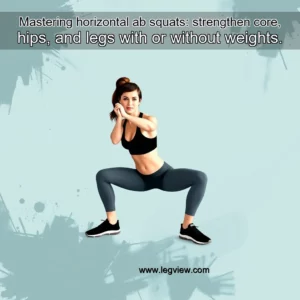
Horizontal ab squats are a unique and effective exercise for targeting the abdominal muscles, particularly the rectus abdominis and obliques. By flipping the traditional bear squat on its head, this exercise provides a new challenge for the core muscles, engaging them in a way that traditional exercises may not.
How to Perform Horizontal Ab Squats
To perform horizontal ab squats, start by lying on your back with your knees bent and feet flat on the ground. Engage your core muscles by drawing your belly button towards your spine. Press your feet into the wall as hard as you can, feeling the pressure in your feet and ankles. Hold for 10 seconds, then release and repeat. Key points to focus on:
- Engage your core muscles throughout the exercise
- Press your feet into the wall as hard as you can
- Hold for 10 seconds, then release and repeat
Variations and Modifications
While the traditional horizontal ab squat is a great exercise, it may not be suitable for everyone. To modify the exercise, try the following:
Exercises like planks, side planks, and bird dog pose can engage your entire core, including your lower abs.
Lower Abs Exercises for a Stronger Core
The lower abs are a crucial component of a strong core, but they can be challenging to target. Fortunately, there are several exercises that can help you build a stronger lower abs.
Core Strengthening Exercises
To build a stronger lower abs, you need to focus on exercises that target the rectus abdominis muscle, which is the primary muscle responsible for flexing the spine. Here are some effective exercises to target your lower abs:
The upper abs, on the other hand, are more involved in movements that require the torso to twist or rotate.
Understanding the Role of Abs in Movement
The abs are a crucial component of the core muscles, which play a vital role in maintaining posture, balance, and stability. The core muscles include the abs, obliques, and lower back muscles.
Core Strength in Your Pocket: The Benefits and Exercises of Isometric Ab Training.
Isometric exercises are a type of strength training that can be done anywhere, anytime, without the need for any equipment or a gym membership. They are particularly beneficial for individuals who have mobility issues or are recovering from an injury.
Benefits of Isometric Ab Exercises
Isometric ab exercises offer numerous benefits for the core muscles, including:
Isometric exercises can be tailored to suit different fitness levels and goals, making them an excellent option for individuals who are new to exercise or looking to challenge themselves.
How to Perform Isometric Ab Exercises
Isometric ab exercises can be performed in a variety of ways, including:
To get started, find a comfortable and stable position, engage your core muscles, and hold the contraction for 5-10 seconds. Release the contraction and repeat for 3-5 sets.